

Rat Serum amyloid P component / APCS / SAP Protein (His Tag)
Sap
- 100ug (NPP2880) Please inquiry
| Catalog Number | P80061-R08H |
|---|---|
| Organism Species | Rat |
| Host | Human Cells |
| Synonyms | Sap |
| Molecular Weight | The recombinant rat APCS comprises 219 amino acids and predicts a molecular mass of 25.3 kDa. The apparent molecular mass of the rat APCS is approximately 30 kDa in SDS-PAGE under reducing conditions. |
| predicted N | Gln 21 |
| SDS-PAGE | 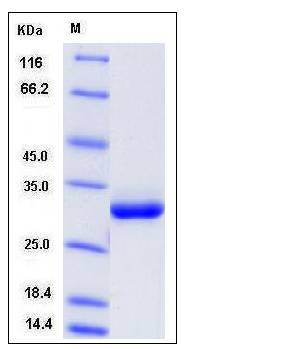 |
| Purity | > 95 % as determined by SDS-PAGE |
| Protein Construction | A DNA sequence encoding the rat APCS (P23680) (Met 1-Ser 228) was expressed, fused with a polyhistidine tag at the C-terminus. |
| Bio-activity | |
| Research Area | Immunology |Inflammation / Inflammatory Mediator |Acute Phase Proteins |
| Formulation | Lyophilized from sterile PBS, pH 7.4 1. Normally 5 % - 8 % trehalose and mannitol are added as protectants before lyophilization. Specific concentrations are included in the hardcopy of COA. |
| Background | Serum amyloid P component (SAP) is the identical serum form of amyloid P component (AP), a highly preserved plasma protein named for its ubiquitous presence in amyloid deposits. As a normal plasma protein first identified as the pentagonal constituent of in vivo pathological deposits called "amyloid". Serum amyloid P component represents another member of the pentraxin family, a highly conserved group of molecules that may play a role in innate immunity. SAP is a key negative regulator for innate immune responses to DNA and may be partly responsible for the insufficient immune responses after DNA vaccinations in humans. SAP suppression may be a novel strategy for improving efficacy of human DNA vaccines and requires further clinical investigations. |
| Reference |