

Human ELK1 Protein (His & GST Tag)
RP23-275N2.2, Elk-1
- 100ug (NPP2103) Please inquiry
| Catalog Number | P12621-H20B |
|---|---|
| Organism Species | Human |
| Host | Baculovirus-Insect Cells |
| Synonyms | RP23-275N2.2, Elk-1 |
| Molecular Weight | The recombinant human ELK1/GST chimera consists of 665 amino acids and migrates as an approximately 73 kDa band in SDS-PAGE under reducing conditions as predicted. |
| predicted N | Met |
| SDS-PAGE | 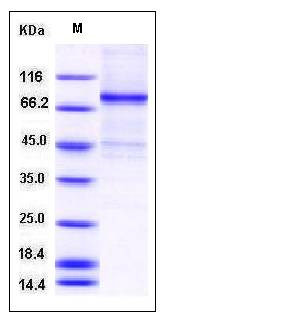 |
| Purity | > 85 % as determined by SDS-PAGE |
| Protein Construction | A DNA sequence encoding the human ELK1 (P19419-1) (Met 1-Pro 428) was fused with the N-terminal polyhistidine-tagged GST tag at the N-terminus. |
| Bio-activity | |
| Research Area | Cancer |Signal transduction |Transcription Factors and Regulators |ETS Family Transcription Factors |
| Formulation | Lyophilized from sterile 20mM Tris, 500mM NaCl, pH 7.4, 10% gly 1. Normally 5 % - 8 % trehalose, mannitol and 0.01% Tween80 are added as protectants before lyophilization. Specific concentrations are included in the hardcopy of COA. |
| Background | E twenty-six (ETS)-like transcription factor 1, also known as Elk1 or Member of ETS oncogene family (ELK1), is a member of the ETS oncogene superfamily which is characterized by a common protein domain that regulates DNA binding to target sequences. Elk1 is expressed in the nuclei of non-neuronal cells and function as a transcription activator. It plays important roles in various contexts, including long-term memory formation, drug addiction, Alzheimer's disease, Down syndrome, breast cancer, and depression. |
| Reference |